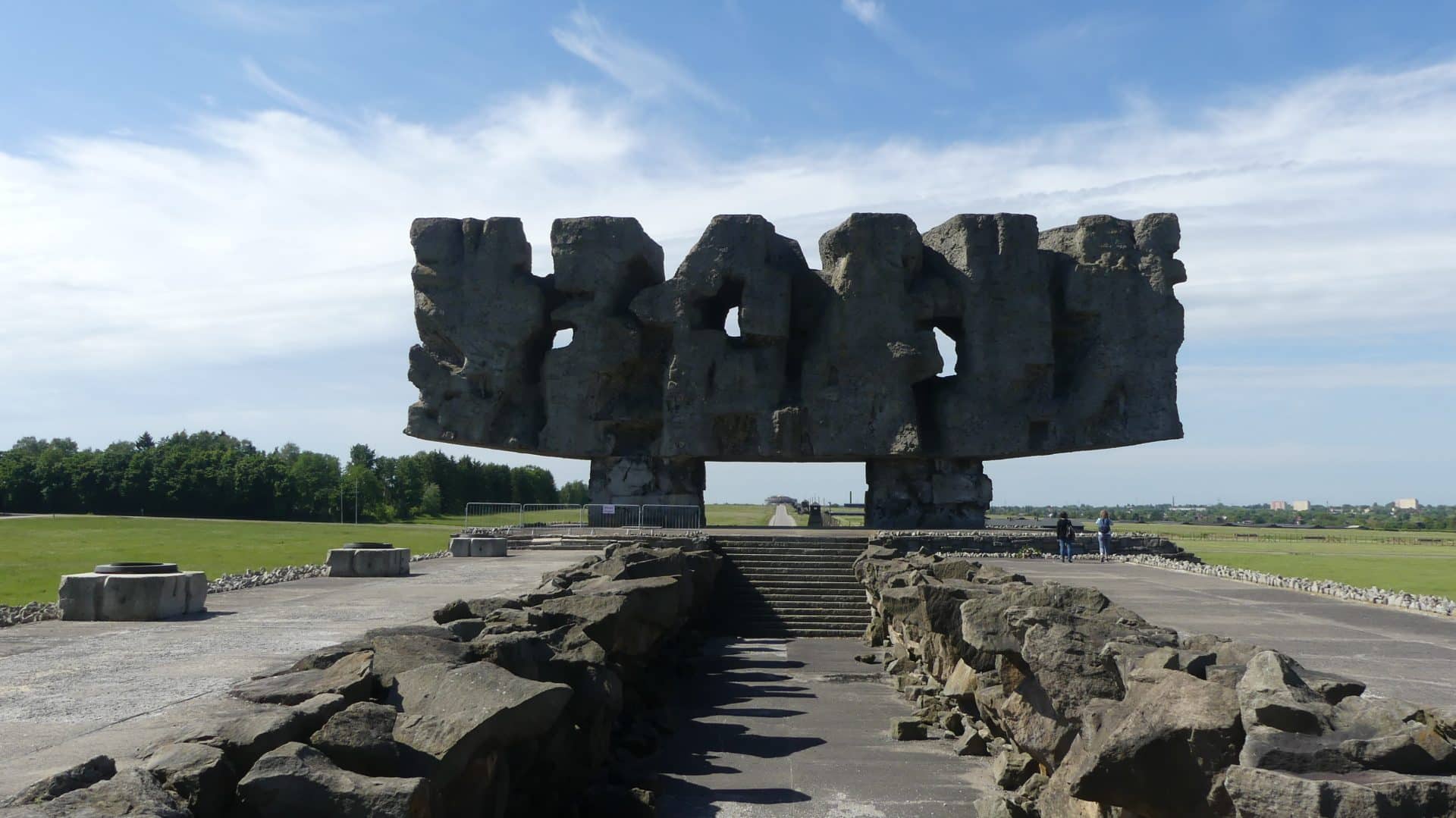
There are places where history is not told, it is felt. The Majdanek Concentration and Extermination Camp, located at the gates of the Polish city of Lublin, is one of those deeply moving sites. Far from being a simple museum, this poignant memorial confronts us, without artifice, with the horrors of the Second World War and the scale of the Holocaust
This article is a visitor's guide, but above all, a call to the duty of remembrance. If you are planning a cultural trip to Poland and passing through Lublin, this stop is essential.
🎬 For a visual overview, check out my visit to Majdanek here.
Historical Context: Why Majdanek in Lublin?
Unlike other camps located in isolated areas, the Nazi regime established Majdanek as early as 1941 only a few kilometers from Lublin city center
Originally designed as a camp for prisoners of war, it quickly became a vast extermination complex. Its history is marked by:
- Prolonged operation: Majdanek operated until the summer of 1944.
- Various victims: Jews, Poles, and Soviet prisoners of war were interned and murdered there.
- An early discovery: The Red Army discovered and liberated the camp in July 1944. This rapid liberation allowed for the preservation of a large part of the facilities, making it an exceptional historical witness today.
Visitor's Guide: Places of interest
The walking tour of Majdanek is a long and emotionally challenging journey. Here are the key points we explore:
1. The Avenue of Honor and the Barracks
As soon as you enter, the remains of the barracks stretch as far as the eye can see. These preserved structures are a reminder of the appalling living conditions. Some barracks have been converted into exhibition spaces, displaying personal belongings, uniforms, and the conditions of detention.
2. The Gas Chambers and the Walls of Horror
In the middle of the site are the killing facilities. Emotions run high when faced with the gas chambers, fences, and watchtowers. Seeing the remains of these instruments of destruction is bloodcurdling and makes the past feel incredibly present.
3. The Mausoleum and Crematorium
- The Crematorium: This is the place where the victims' bodies were cremated.
- The Mausoleum: This imposing stone structure contains the ashes of the camp's victims. It is the culmination of the visit and the most solemn place of remembrance.
My Feelings: Emotion in the Face of History
I had never visited a concentration camp before. Of course, I studied this period in school, but there is a world of difference between learning about it in books and being confronted with the reality of the site.
This visit was a moment of rare emotional intensity. Seeing human brutality in its raw form, contemplating the worst that human beings are capable of doing in the world, is an experience that leaves a lasting impression on you.
The most difficult moment of the visit, for me, was the crematorium. Upon entering, I could no longer hold back my tears. The atmosphere there is unbearable. Moreover, I have visited this place twice, and each time, the emotion remains just as strong and devastating.
Practical Advice and Duty of Remembrance in Lublin
How to get there from Lublin?
Majdanek is easily accessible from Lublin city center by bus or taxi. Allow approximately 15 to 20 minutes for the trip.
How much time should I allow?
You should allow at least 3 to 4 hours for a complete visit, to take the time to read the explanatory panels and soak up the atmosphere without rushing.
The Memorial Shop and Support
Visiting the camp is free. However, a small shop on site offers many historical books and documents in different languages. Buying from this shop helps directly support the site and its maintenance, thus contributing to the preservation of this essential memorial site.
Respect and Solemnity
Visitors must show absolute respect for the site. Silence is required. This is a place of contemplation, not just a tourist attraction. The experience is difficult, but it nourishes the soul and reinforces the duty to remember.
Never forget
Visiting Majdanek is an act of citizenship. It means confronting history to ensure that such events never happen again. The experience is heavy, but it nourishes the soul and reinforces the duty to remember.



Leave a comment